

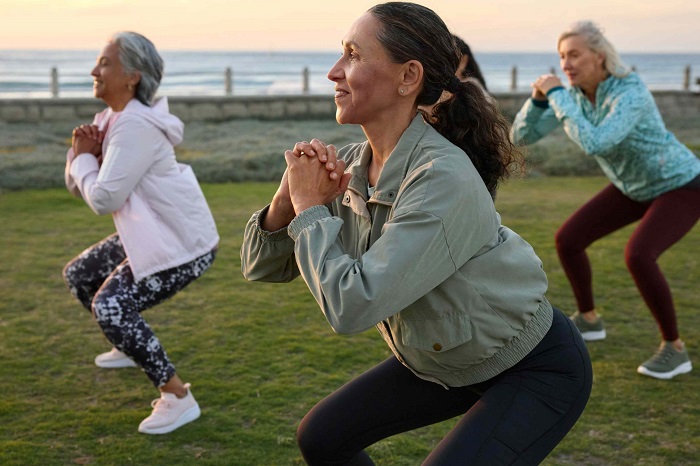
For generations, Western culture treated aging as an inevitable slide into physical fragility. The conventional retirement script encouraged individuals to slow down, avoid strenuous exertion, and treat the body like a fragile antique that should be handled with care. Well-meaning family members urged aging relatives to take it easy, hire out physical chores, and spend their later years in restful comfort. Modern physiology has completely upended this passive outlook. We now understand that much of what was once dismissed as normal, inevitable aging is actually the predictable physiological consequence of chronic disuse.
The human body is an inherently responsive organism that operates on a strict principle of adaptive economy: what is not consistently challenged is systematically recycled. When physical demands decline, the central nervous system downregulates motor recruitment, skeletal tissues leach minerals, and muscle fibers atrophy. Maintaining muscular strength through intentional exercise is not about vanity or athletic ambition; it is the single most potent intervention available for preserving functional autonomy, mental acuity, and physical resilience well into the second half of life.
Halting the Creep of Sarcopenia and Rescuing Fast-Twitch Fibers
Beginning in our thirties, human physiology undergoes a quiet structural shift known as sarcopenia—the age-related loss of skeletal muscle mass and muscular quality. Without active resistance training, the average adult loses between three and eight percent of their total muscle mass per decade, a rate that accelerates dramatically past age sixty. This loss is not merely quantitative; it alters the fundamental composition of muscle tissue, as lean contractile fibers are gradually replaced by non-functional adipose tissue and fibrous collagen bands.
Crucially, sarcopenia does not impact all muscle fibers equally. The body relies on two primary fiber types: slow-twitch (Type I) fibers, which handle low-intensity aerobic tasks like standing and casual walking, and fast-twitch (Type II) fibers, which produce explosive force, speed, and immediate power. As people age, it is the fast-twitch fibers that atrophy first and fastest due to lack of recruitment.
While taking a daily walk around the neighborhood is wonderful for cardiovascular health and mental clarity, it does virtually nothing to preserve fast-twitch fibers. Rescuing these vital fibers requires mechanical tension—demanding that muscles push, pull, or lift loads heavy enough to signal the nervous system that rapid, high-force production is still essential for survival.
Reinforcing the Skeletal Matrix and Protecting Articular Cartilage
Bone tissue is not an inert calcium framework; it is dynamic, living tissue constantly breaking down and rebuilding in response to mechanical strain. When muscles contract against resistance, they pull on tendons, which in turn pull directly on the periosteum of the bone. This mechanical tension triggers piezoelectric signaling, a biological process that commands osteoblasts to deposit new calcium and collagen into the bone matrix.
Sedentary aging allows osteoclast activity (bone resorption) to outpace osteoblast activity (bone formation), leading to osteopenia and brittle osteoporosis. Weight-bearing exercise and structured resistance training deliver the precise axial and rotational loading required to maintain dense, fracture-resistant bones.
Simultaneously, regular strength work protects articulating joints. Knee, hip, and shoulder discomfort often tempts aging adults to avoid movement entirely. Yet cartilage possesses no direct blood supply; it relies entirely on the cyclical compression and decompression of movement to draw in nutrient-dense synovial fluid. Strengthening the quadriceps, hamstrings, and gluteal complex creates a muscular shock absorber around the knee and hip capsules, redistributing mechanical forces away from worn joint cartilage and onto resilient muscle bellies.
Neuromuscular Reactivity, Proprioception, and Fall Prevention
In geriatric healthcare, an unexpected fall is often the catastrophic pivot point that marks the abrupt end of independent living. A slip on an icy sidewalk or a trip over a rug rarely occurs because an individual lacks cardiovascular stamina. It happens because of an acute failure of neuromuscular speed, ankle stability, and postural reflexes.
Strength training is fundamentally an education of the nervous system. When you perform multi-joint resistance exercises, the brain must continuously coordinate motor unit recruitment, calculate center-of-mass shifts, and recruit stabilizing muscles across the torso and hips. This active coordination sharpens proprioception—your nervous system’s subconscious awareness of where your limbs are positioned in space.
More importantly, maintaining strength preserves your rate of force development. When an older adult stumbles, the difference between catching their balance and suffering a shattered femoral neck comes down to milliseconds. If the nervous system and fast-twitch muscle fibers can fire rapidly enough to thrust a foot forward and absorb the sudden impact of the body’s falling weight, the crisis is averted. Strength provides the split-second physical insurance policy that keeps a momentary slip from turning into a life-altering emergency.
Muscle as an Essential Metabolic Armor
It is a mistake to view skeletal muscle solely as a mechanical apparatus for locomotion. In reality, muscle is the largest, most metabolically active endocrine organ in the human body. It serves as our primary storage reservoir for amino acids and acts as the central metabolic sink for circulating blood glucose.
As muscle mass declines with age, the body’s capacity to dispose of post-meal blood sugar diminishes correspondingly. This structural deficit drives insulin resistance, promotes chronic low-grade systemic inflammation, and accelerates the accumulation of dangerous visceral fat around internal organs. This cluster of metabolic breakdowns significantly elevates the lifetime risk of Type 2 diabetes, non-alcoholic fatty liver disease, and cardiovascular atherosclerosis.
Engaging in regular resistance training stimulates glucose transporter proteins (GLUT4) to migrate to muscle cell surfaces independent of insulin, directly clearing sugar from the bloodstream and restoring cellular insulin sensitivity. The more lean tissue an individual maintains, the higher their resting metabolic rate and the greater their systemic resilience against metabolic decline.
Designing a Sustainable Blueprint for Functional Longevity
Starting a strength training routine later in life does not require punishing barbell regimens or intimidating gym environments. The primary objective is to build capacity across foundational, real-world movement patterns that directly mirror daily life:
-
Squatting and Knee Flexion: Practicing bodyweight sit-to-stands, goblet squats with a light dumbbell, or leg presses preserves the exact strength needed to rise comfortably from deep armchairs, low car seats, and restroom facilities without assistance.
-
Hip Hinging and Posterior Chain Engagement: Performing Romanian deadlifts with light kettlebells or resistance bands conditions the glutes, hamstrings, and spinal erectors, teaching the body to lift groceries, garden bags, and grandchildren using the hips rather than straining the delicate lumbar spine.
-
Upper-Body Pushing and Pulling: Incorporating dumbbell rows, lat pulldowns, overhead presses, and modified push-ups preserves the shoulder stability required to place luggage in overhead compartments, open heavy doors, and break sudden falls.
-
Loaded Carries and Grip Strength: Carrying moderate weights in each hand for time—known as farmer’s walks—builds extraordinary core stability and forearm endurance. In clinical medicine, grip strength is widely recognized as a primary biomarker for overall biological vitality and all-cause mortality.
Aging gracefully is not about gracefully conceding your physical capabilities to the passage of time. It is about actively cultivating the muscular capacity required to engage with life on your own terms. By dedicating two to three days each week to progressive, intentional resistance exercise, you protect your skeletal frame, shield your metabolism, and preserve the physical freedom to travel, play, work, and live independently for decades to come.
